
Based on the DeepSeek Large Language Model, ChatRailETL: A Revolutionary Data Processing Solution for Intelligent Maintenance of Railway Equipment
Based on the DeepSeek Large Language Model, ChatRailETL: A Revolutionary Data Processing Solution for Intelligent Maintenance of Railway Equipment
Introduction & Background
In the field of intelligent maintenance for railway equipment, the efficiency and accuracy of data processing are critical to enhancing the precision and timeliness of equipment condition analysis. With the advancement of monitoring capabilities across various railway disciplines, the massive volume of heterogeneous data generated by equipment in track, signaling, and power supply systems has posed significant challenges to conventional data processing methods.
Traditional ETL (Extract-Transform-Load) processes face issues such as long development cycles, operational complexity, and limited business agility when handling these complex multi-source railway data, falling short of meeting the real-time and accuracy requirements essential for intelligent maintenance.
Recently, DeepSeek, a leading domestic large language model, has demonstrated strong capabilities in natural language understanding, chain-of-thought reasoning, and multimodal learning – offering new perspectives to address data processing challenges in railway intelligent maintenance. This paper proposes ChatRailETL, a solution based on the DeepSeek model, which aims to automate the ingestion, cleansing, and metric calculation of railway equipment data through natural language interaction, breaking down professional barriers and significantly improving data processing efficiency.
01 Intelligent Railway Data Processing Flow Based on DeepSeek
The core architecture of ChatRailETL follows a streamlined workflow: "Natural Language Instruction → Intent Understanding → Task Decomposition → Execution Scheduling → Result Verification & Feedback".
Users submit data processing requests through natural language descriptions. The DeepSeek model interprets these requirements, breaking down complex requests into specific operational tasks. It then generates and executes corresponding ETL modules, ultimately presenting the processed results in an easily understandable format.
The following outlines the chain-of-thought construction for ETL task execution within this intelligent railway data processing framework:
1.1 Building the RailETL Knowledge Base
A comprehensive knowledge base is established by organizing relevant data source tables and fields. This includes master data standards, data dictionaries, table definitions, field specifications, metric descriptions, data source interface documentation for intelligent maintenance systems, along with definitions of data processing functions and stored procedures. These materials are processed into vector format and stored in a vector database to support the model's understanding and operations.
1.2. Semantic Mapping of Technical Terms & Construction of Data Relationship Knowledge Graph
Leveraging DeepSeek's semantic understanding capabilities, the system establishes mapping relationships between terminology from different domains. For example, it recognizes that "fault" in track maintenance and "obstruction" in signaling refer to the same semantic concept, resolving terminology inconsistencies and laying the foundation for cross-disciplinary analysis. Additionally, a knowledge graph is constructed to represent data relationships and lineage, enabling the system to retrieve data lineage paths and association fields between related tables.
1.3. Natural Language Instruction Parsing
ChatRailETL utilizes DeepSeek's semantic comprehension to convert user-described requirements in natural language into structured instructions. It identifies key entities (e.g., stations, train numbers), operation types (e.g., ingestion, cleansing, aggregation, fusion), and constraints (e.g., timeliness, accuracy).
1.4. Knowledge Base RAG and Knowledge Graph GraphRAG
By integrating Retrieval-Augmented Generation (RAG) and Graph Retrieval-Augmented Generation (GraphRAG), ChatRailETL retrieves table structures, field attributes, data lineage relationships, and inter-table associations from the knowledge base and graph. It automatically generates a directed acyclic graph (DAG) for ETL task workflows, intelligently schedules ETL modules, handles temporal dependencies across specialized data, and supports cross-domain data correlation analysis and automated generation of complex queries.
1.5. Adaptive Execution
Based on function calling mechanisms, the system automatically invokes relevant data processing functions, stored procedures, and other toolchain components to execute tasks.
1.6. Metric Calculation
Using function calling technology, the system automatically executes metric calculation functions, establishes unified indicators spanning multiple disciplines, and enables integrated cross-domain analysis and decision support.
1.7. Result Calibration and Validation
Combining predefined calibration rules, the system generates visual reports (including data lineage graphs) and natural language summaries. Any issues identified during calibration are documented in the report, facilitating clear user feedback. Users can then engage in multi-turn dialogues to refine ETL requirements and resolve ambiguities.
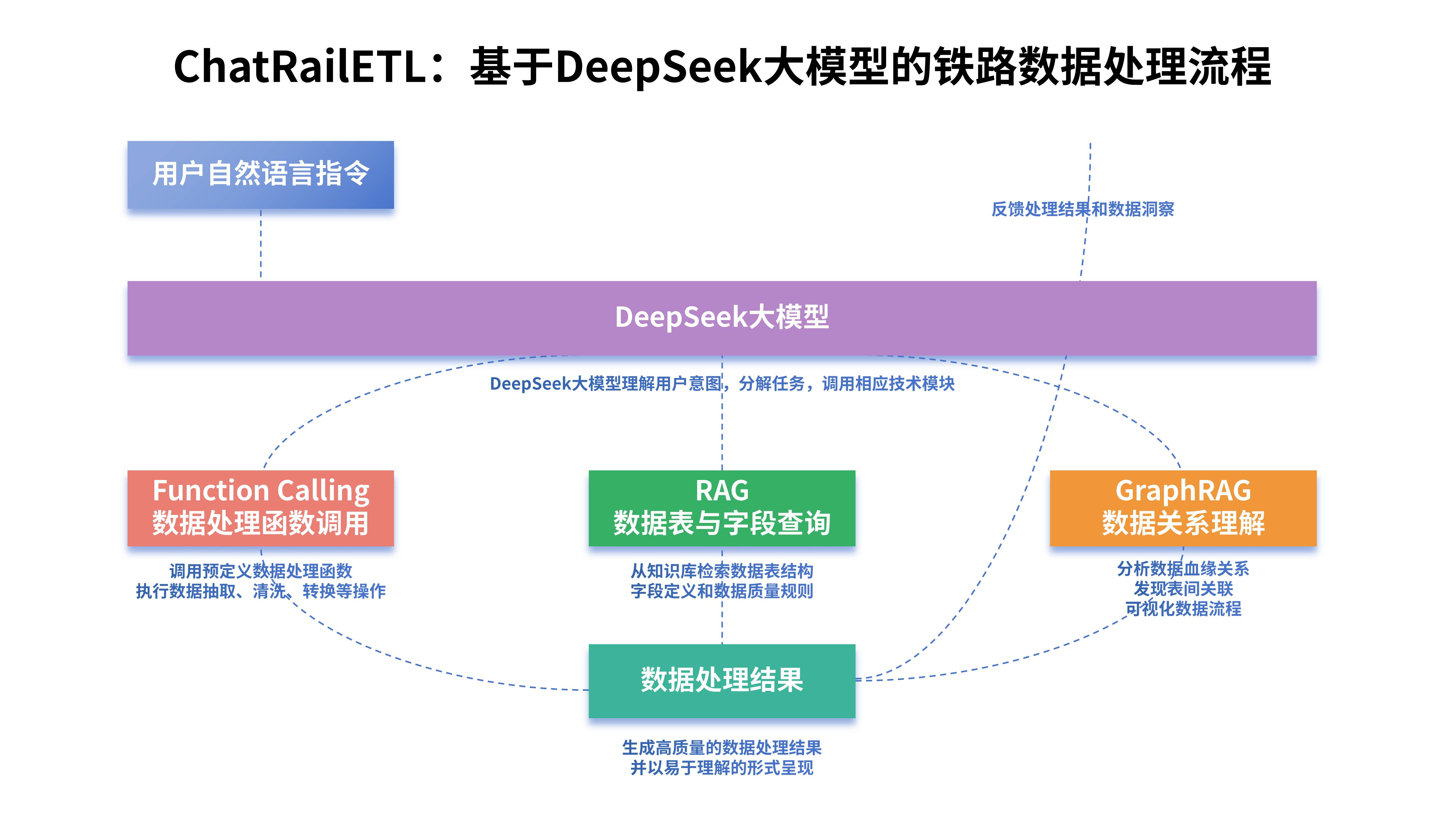
Figure 1: ChatRailETL Data Processing Workflow
02 Key Technologies for Intelligent Railway Data Implementation Based on DeepSeek
Application of RAG Technology in Data Table and Field Definition Queries
Retrieval-Augmented Generation (RAG) technology serves as a core component of ChatRailETL, enabling the system to retrieve relevant information from a pre-established knowledge base based on user queries, thereby enhancing the response capability of the DeepSeek model. The application of RAG technology in ChatRailETL is primarily demonstrated in the following aspects:
2.1. Intelligent Retrieval of Data Dictionaries
When users need to understand the definition of a specific data table or field, the system utilizes RAG technology to retrieve relevant information from the data dictionary knowledge base. This knowledge base incorporates standardized master data, data dictionaries, standard table names, field names, metric names, and metric calculation formulas—processed through vectorization and embedding operations—stored in a vector database. The system then provides accurate answers based on the retrieved information.
2.2. Semantic Understanding and Mapping of Fields
During the data integration process, the system utilizes RAG technology to interpret the semantics of fields from different data sources, enabling automatic field mapping across heterogeneous systems.
2.3. Automated Recommendation of Data Quality Rules
Based on its understanding of data characteristics, the system employs RAG technology to retrieve quality rules from the knowledge base that are applicable to similar data scenarios. It then recommends appropriate data cleansing rules to users and generates corresponding ETL processing scripts for reference.
Application of Function Calling Technology in Data Processing
Function Calling stands as one of the key technologies in ChatRailETL, enabling the DeepSeek model to automatically invoke predefined standard data processing functions or APIs based on user instructions in natural language. The implementation of Function Calling involves the following critical steps:
2.4. Intent Recognition and Function Matching
The DeepSeek model analyzes the user's natural language instructions to identify processing intent, then matches it to appropriate data processing functions—including stored procedures in databases. To enhance the adaptability of predefined functions across varied scenarios, metadata programming can be employed. This approach implements query and processing logic independent of specific table or field names, ensuring broader applicability.
2.5. Parameter Extraction and Validation
DeepSeek extracts required parameters—such as data sources, time ranges, and data fields—from user instructions and performs validation to ensure correctness and completeness.
2.6. Function Invocation and Execution
The system calls the corresponding data processing functions using the parsed parameters and executes the data processing tasks accordingly.
Through Function Calling technology, ChatRailETL effectively translates natural language instructions into concrete data processing operations, advancing automation and intelligence in data workflows.
Application of GraphRAG Technology in Data Relationship Understanding
GraphRAG technology represents an enhancement and extension of traditional RAG, integrating the capabilities of knowledge graphs and graph databases to better understand and process complex data relationships. Within ChatRailETL, GraphRAG is applied in the following key aspects:
2.7. Data Lineage Analysis
Using GraphRAG, the system constructs data lineage graphs to trace the flow of data from source to target systems, helping users understand data origins and transformations.
2.8. Inter-Table Relationship Discovery
The system applies GraphRAG to analyze relationships between different data tables, automatically identifying potential linking fields and supporting users in conducting data correlation analysis.
2.9. Data Process Visualization
Through GraphRAG technology, the system visualizes complex data processing workflows, enabling users to better comprehend each stage of the data handling process.
03 Efficiency Gains and Value: Practical Outcomes of ChatRailETL in Addressing Railway Data Processing Challenges
As an innovative data processing solution, ChatRailETL has demonstrated significant effectiveness in addressing key data handling challenges in the intelligent maintenance of railway track, signaling, and power supply equipment, delivering notable efficiency improvements and value creation.
Automation Benefits in Data Integration
By adopting a natural language interaction approach, ChatRailETL substantially streamlines the data integration process while enhancing both efficiency and accuracy:
3.1. Reduced Integration Time
Under traditional methods, integrating a new data source typically requires 3-5 working days. With ChatRailETL, configuration is completed within 1 hour using predefined knowledge and rules, cutting deployment time by over 80%.
3.2. Lowered Technical Barriers
Even operational and maintenance staff without programming expertise can perform data integration through natural language instructions, eliminating the need for developer involvement and significantly reducing technical thresholds.
3.3. Error Rate Reduction
By leveraging RAG technology to interpret data table structures and field definitions, ChatRailETL automates field mapping and type conversion, reducing error rates by over 60%.
Intelligent Data Cleansing Outcomes
Leveraging the DeepSeek model's capability to understand and learn data characteristics, ChatRailETL has achieved intelligent data cleansing with the following results:
3.4. Automated Rule Generation
ChatRailETL automatically generates appropriate cleansing rules, reducing rule creation time by over 70%.
3.5. Intelligent Anomaly Handling
The system effectively identifies and processes various types of anomalous data, improving anomaly detection accuracy by more than 50%.
3.6. Optimized Cleansing Workflow
Supporting both incremental and real-time cleansing, ChatRailETL has enhanced overall cleansing efficiency by over 60%.
Enhanced Accuracy in Metric Calculation
By leveraging DeepSeek's understanding of business logic and the precise invocation of computational functions through Function Calling technology, ChatRailETL has significantly improved the accuracy of metric calculations. This approach reduces development efforts that previously required several to dozens of person-months down to just a few person-days.
3.7. Standardized Calculation Logic
Through the establishment of unified metric calculation standards, ChatRailETL ensures consistency in computational logic, improving result consistency by over 80%.
3.8. Transparent Calculation Process
Utilizing GraphRAG technology to visualize data lineage for metrics, ChatRailETL makes the calculation process fully transparent and interpretable, enhancing explainability by more than 90%.
04 Comparison with Traditional ETL Development
To provide a clearer demonstration of ChatRailETL's advantages over traditional ETL development, we have conducted a comparative analysis across multiple dimensions:
Based on the analysis above, it is evident that ChatRailETL effectively addresses critical data processing challenges in the intelligent maintenance of railway track, signaling, and power supply systems. By reducing technical barriers, improving processing efficiency, and enhancing adaptability, the solution provides robust data support for intelligent railway equipment maintenance operations.
Conclusion
ChatRailETL, as an innovative data processing solution powered by the DeepSeek large language model, introduces new possibilities for data handling in the intelligent maintenance of railway track, signaling, and power supply systems. By adopting natural language interaction, it achieves automation and intelligence in data integration, cleansing, and metric calculation, significantly enhancing both the efficiency and quality of data processing. This next-generation approach will provide robust, data-driven support for intelligent railway maintenance operations.
